- Home
- /
- Vacations in Verona
- /
- What to eat in...


What to eat in Verona
What to Eat in Verona: 10 Typical Dishes
Discover Traditional Veronese Cuisine
Beyond its romantic atmosphere, historic landmarks and rich cultural heritage, Verona is also renowned for its traditional cuisine. Verona’s culinary traditions have been shaped by the surrounding landscapes, from the plains and the hills of Valpolicella to Lake Garda and the Lessinia mountains. Together, these areas provide the rice, cheeses, meats and wines that define the city’s most iconic dishes. Whether you’re exploring the city’s famous attractions or wandering through its charming streets, discovering the local food is an essential part of the experience. If you’re wondering what to eat in Verona, here are 10 traditional dishes you won’t want to miss.
Traditional Savoury Dishes in Verona
Verona’s savoury dishes showcase the region’s culinary traditions, with recipes inspired by local ingredients and seasonal produce.
Risotto with Tastasal
A true speciality of Verona and the Veneto region, risotto with tastasal is one of the most traditional dishes in Veronese cuisine. It’s prepared with tastasal – minced pork seasoned with salt and pepper. The name literally means “taste the salt” in the Venetian dialect, as the mixture was originally used to check the seasoning of the meat before making sausages and salami. Today, the dish remains a favourite in Veronese kitchens, with each family and restaurant adding its own touch to the recipe. For a complete local dining experience, pair it with a glass of wine from the Valpolicella region.
Boiled meat with pearà
One of the most traditional dishes in Veronese cuisine, boiled meat with pearà is especially popular during the colder months and is often enjoyed by local families at Christmas. The dish features tender boiled meat and vegetables served with pearà, a rich, peppery sauce made from breadcrumbs, beef broth and grated cheese.
While recipes may vary slightly from one household to another, the key ingredients remain the same, preserving a culinary tradition that has been passed down through generations. If you’re visiting Verona in winter, you’ll often find this comforting speciality on the menus of traditional trattorias, where it’s best enjoyed as part of a classic Veronese meal.
Pastissada de Caval
Also known as braised horse, this traditional Veronese dish has a fascinating history dating back to the 5th century. According to local legend, it originated after the battle between Theodoric, King of the Ostrogoths, and Odoacer, King of Italy. With many horses left on the battlefield, the local population preserved the meat by marinating it in red wine with vegetables and spices before slowly cooking it. Over the centuries, the recipe has been passed down from generation to generation and remains one of Verona’s most iconic traditional dishes.
Pasta e fasoi (beans)
One of the most comforting traditional dishes in Verona, pasta e fasoi is a hearty recipe made with pasta and beans that has been enjoyed for centuries. While its origins are debated, with some tracing it back to the Roman Empire and others to the Middle Ages, it became popular thanks to its simple ingredients, rich flavour and affordability.
In its more rustic version, the dish is often served with pork rinds, a traditional addition in rural Veneto. Throughout the region, pasta e fasoi is commonly prepared with local pasta varieties such as bigoli or tagliatelle, making it a staple of traditional home cooking. It pairs well with both red and white Venetian wines, depending on the recipe.
Risottos, Gnocchi and Polenta
Rice, gnocchi and polenta have long been at the heart of traditional food in Verona. Closely linked to local celebrations, farming traditions and regional ingredients, these dishes continue to be enjoyed throughout the year.
Amarone risotto
Another typical dish in Verona is Amarone risotto which showcases some of the region’s finest ingredients. Prepared with Vialone Nano rice, Amarone della Valpolicella wine and grated Monte Veronese cheese, it offers a rich, velvety flavour that has become a favourite among both locals and visitors.
As Amarone is both the key ingredient and the perfect accompaniment, this dish is best enjoyed with a glass of the same renowned red wine. Amarone risotto can often be found on the menus of many traditional restaurants across Verona, particularly during the autumn and winter months.

Potato Gnocchi
A much-loved part of traditional food in Verona, potato gnocchi are closely linked to the city’s famous Carnival celebrations. Soft and appetising, they’re typically served with tomato sauce, gorgonzola, or the classic combination of butter and sage.
According to local tradition, the dish dates back to a famine in Verona, when Tommaso da Vico donated bread, wine, flour, butter, eggs and cheese to the people of the San Zeno district on the last Friday before Lent. In his will, he requested that these provisions continue to be distributed every year, giving rise to the city’s famous Venerdì Gnocolar (Gnocchi Friday), a tradition that remains one of the highlights of Verona’s Carnival.
While exploring the historic San Zeno district, consider visiting San Zeno Market, where you can discover local produce, regional specialities and traditional Veronese atmosphere before enjoying a plate of freshly prepared potato gnocchi at one of the area’s nearby trattorias.
Polenta
A classic dish in Verona, polenta has long been associated with the farming traditions of northern Italy. Made from cornmeal slowly cooked in salted water, this simple yet satisfying dish has been enjoyed for generations and remains a popular choice throughout the region.
Polenta can be served in many different ways, including with beans (polenta infasola), slow-cooked meats, mushrooms or melted cheese. In Verona, it’s also traditionally paired with renga (salted herring), a combination that reflects the city’s culinary heritage.
Traditional Desserts from Verona
From festive favourites to regional sweet treats, these recipes have been passed down through generations and remain an important part of the city’s culinary traditions.
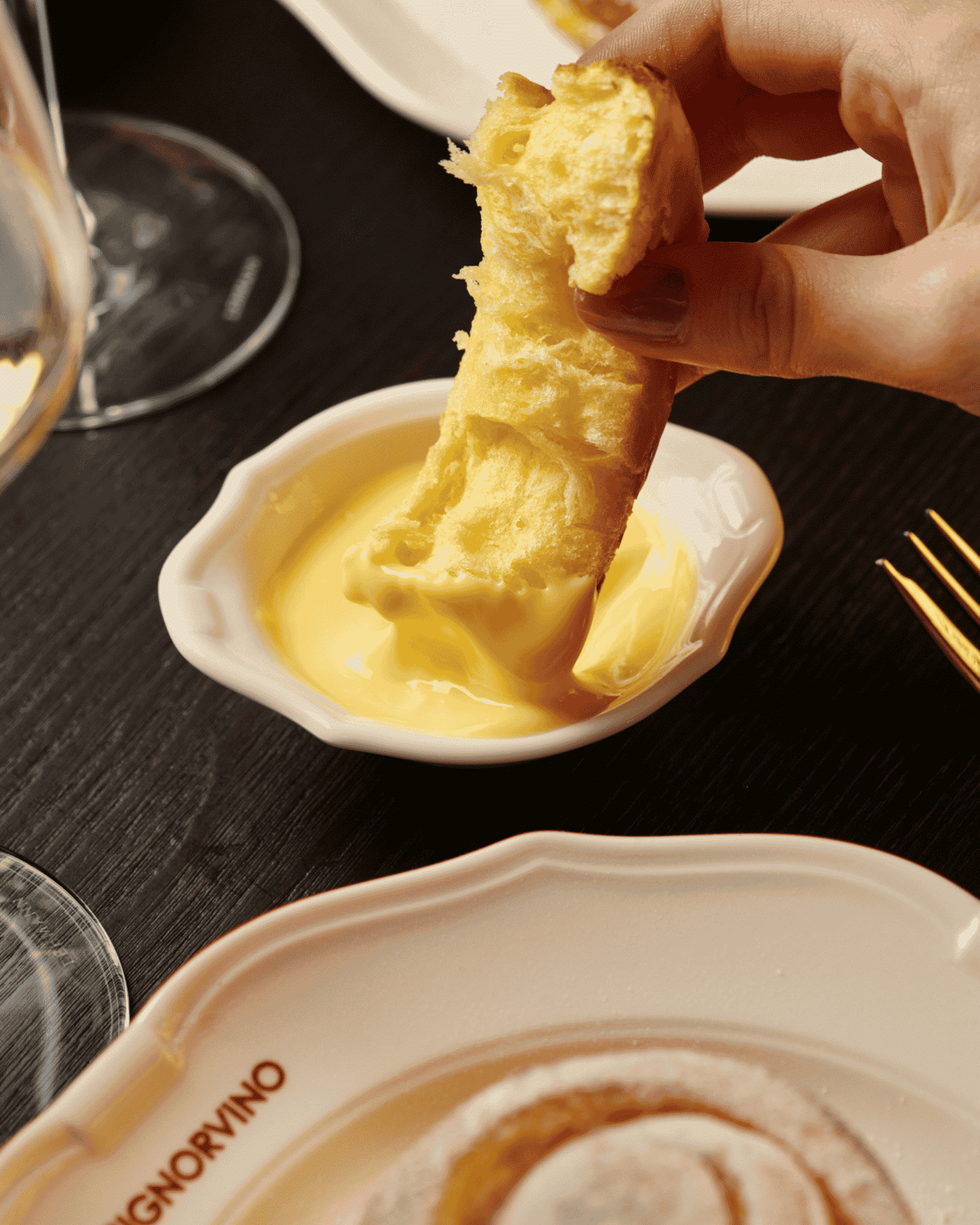
Pandoro
No guide to food in Verona would be complete without Pandoro, the city’s most famous sweet treat. Made with flour, sugar, eggs and butter, this light, buttery cake was created in 1894 by Domenico Melegatti at his bakery on Corso Porta Borsari. It soon became one of Italy’s favourite Christmas desserts, alongside the traditional Milanese panettone. Today, Pandoro remains a symbol of Verona’s culinary heritage and is enjoyed throughout the festive season.

Fritole
A favourite during Carnival, fritole are among the most traditional sweet treats in Verona and across the Veneto region. In fact, in the 18th century, they were declared the “National Sweet of the Veneto State.” Made with flour, eggs, apples and raisins before being lightly fried, fritole are enjoyed for their soft texture and comforting flavour. During Carnival, you’ll find them in bakeries, pastry shops and market stalls throughout Verona, where they’re best enjoyed warm with a cup of coffee.
Sfogliatelle of Villafranca
Just a short distance from Verona, the town of Villafranca di Verona is famous for its sfogliatelle, a traditional pastry enjoyed throughout the region. Made with simple ingredients including flour, butter, water, salt, eggs and sugar, these delicate pastries require time and skill to prepare, making them a true local speciality. They pair perfectly with an Italian coffee or an afternoon espresso and can be found in many bakeries and pastry shops in Villafranca and the surrounding area.
Where to Eat Traditional Food in Verona
One of the best ways to experience Verona’s specialties is by visiting traditional trattorias, local osterias and restaurants that celebrate the region’s culinary heritage. For an authentic dining experience, visit Signorvino La Torre, where you can enjoy regional dishes paired with carefully selected local wines.
It can also be a good idea to try a traditional aperitivo right in the peaceful courtyard of Hotel Veronesi La Torre, relaxing before dinner with a glass of wine or a classic Italian spritz. If you’d like to delve deeper into Verona’s culinary culture, consider joining a wine tasting at the Signorvino restaurant, where you’ll have the chance to sample a wide selection of Venetian wines alongside top labels from across Italy, and even purchase your favorite bottles to take home
Local Wines to Pair with Veronese Cuisine
Verona’s culinary traditions are closely connected to the wines produced across the surrounding countryside, from the hills of Valpolicella to the shores of Lake Garda.
Local Wines To Try
- Amarone della Valpolicella – A full-bodied red that pairs beautifully with hearty meat dishes, braised recipes and Amarone risotto.
- Valpolicella Classico – A lighter red, ideal with risotto with tastasal, pasta e fasoi and other traditional dishes.
- Bardolino – A fresh, versatile red that’s perfect with lighter meals and aperitivi.
- Soave – A crisp white wine that complements polenta, vegetable dishes and lighter regional recipes.
- Recioto della Valpolicella – A sweet dessert wine that’s the perfect accompaniment to Pandoro and other traditional desserts.
From hearty regional dishes to traditional desserts and local wines, Verona’s culinary heritage is as rich as its history. Exploring the city’s food culture is a unique way to immerse yourself in the authentic flavours, traditions and warm hospitality that make Verona such a memorable destination.
FAQ - What to eat in Verona
Verona is famous for traditional dishes such as risotto with tastasal, pastissada de caval, potato gnocchi and pasta e fasoi. These recipes have become an integral part of the city’s culinary heritage and culture.
Consider trying Pandoro, the city’s iconic Christmas cake, and fritole, a popular Carnival sweet. If you’re exploring the surrounding area, the famous sfogliatelle of Villafranca are also well worth tasting.
Verona’s food can be enjoyed throughout the year, but some specialities are closely linked to the seasons. Fritole and potato gnocchi are popular during Carnival, Pandoro is traditionally enjoyed at Christmas, while hearty dishes such as boiled meat with pearà are favourites during the autumn and winter months.
Absolutely. Verona offers a diverse food scene, from traditional trattorias and local markets to wine bars and food tours. Combined with its rich culinary heritage and renowned wines, the city is an excellent destination for anyone looking to discover authentic flavours.
Many traditional dishes in Verona are prepared using local ingredients such as Vialone Nano rice, Monte Veronese cheese, Amarone della Valpolicella wine, cornmeal and seasonal vegetables. These regional products play an important role in the city’s culinary traditions.